Maui guide
Whale season from your oceanfront lanai
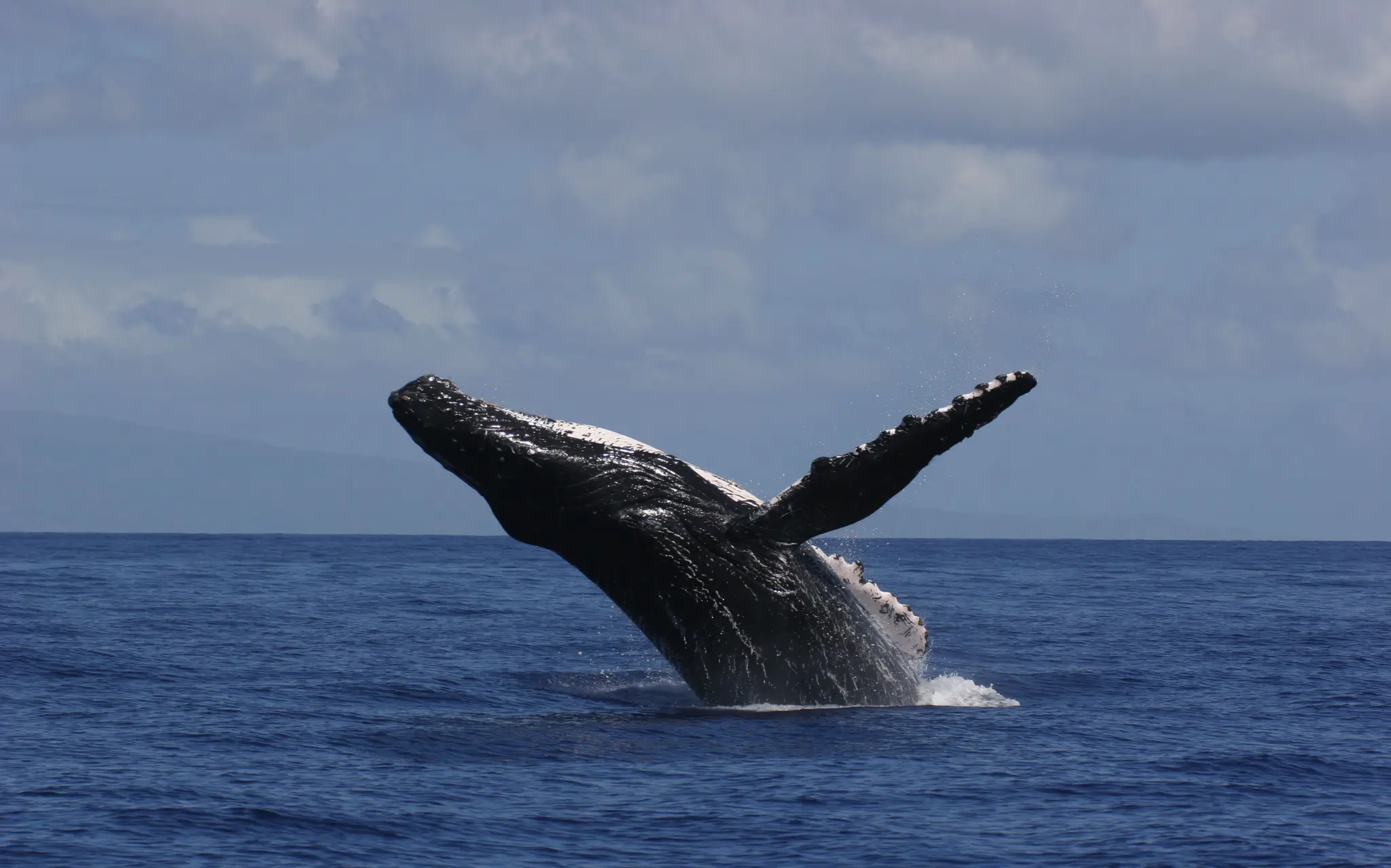
Humpback viewing from the waters off West Maui.
Maui guide
Humpback viewing from the waters off West Maui.
Humpback whales migrate through Hawaiian waters in winter, with West Maui offering expansive views across the channel. From Unit 4B, the lanai is an easy place to scan the horizon without leaving home.
Look for blows, splashes and tail flukes. Binoculars help. Viewing is never guaranteed, but the quiet ritual of watching the water is part of the experience.
Whales, wildlife and sanctuary waters
Thousands of North Pacific humpbacks travel to warm, shallow Hawaiian waters to mate, give birth and nurse calves. The broader season generally runs from November through May, with the usual peak from January through March. Sightings remain possible outside the peak, but are never guaranteed.
Start with the naked eye and scan one section of horizon at a time. A blow can hang briefly above the water; repeated blows may reveal direction of travel. Binoculars help confirm a dorsal fin, pectoral slap or tail fluke without losing the wider scene.
Meet the humpback
Humpback whales are baleen whales, not toothed whales. Their scientific name, Megaptera novaeangliae, means “big-winged New Englander”—a reference to their exceptionally long pectoral fins and the region where European whalers first described them.
Humpbacks filter-feed on krill and small schooling fish. Instead of teeth, they have fringed baleen plates that strain prey from enormous mouthfuls of seawater. They may herd prey with bubbles, sounds, the seafloor or their long pectoral fins; some groups cooperate to create “bubble nets” before lunging through the concentrated fish.
The whales seen around Maui generally feed in cold, productive North Pacific waters—including Alaska, British Columbia and the Bering Sea—then migrate to Hawaiʻi to mate, give birth and nurse calves. NOAA reports that some make the roughly 3,000-mile journey from Alaska in as few as 28 days. They rely heavily on stored blubber while in the warm breeding grounds.
Females usually produce one calf every two to three years after an approximately 11-month pregnancy. A newborn is already about 13 to 16 feet long. Calves stay close to their mothers, nurse on energy-rich milk and may remain with them for up to a year before weaning.
Males produce long, complex songs on the breeding grounds; whales in the same population generally sing the same evolving song. Each whale’s tail has a distinctive combination of pigmentation, shape and scars. Researchers photograph those flukes like fingerprints to identify individuals and follow their travels over time.
Interactive whale explorer
Select a life stage or season to explore how a calf born near Hawaiʻi becomes one of the ocean’s great long-distance travelers.
After an approximately 11-month pregnancy, a mother gives birth to one calf. Newborns are already about 13–16 feet long and stay close beside her.
Mating, calving and nursing in warm, shallow water. Peak viewing around Maui is usually January through March.
Who shares these waters?
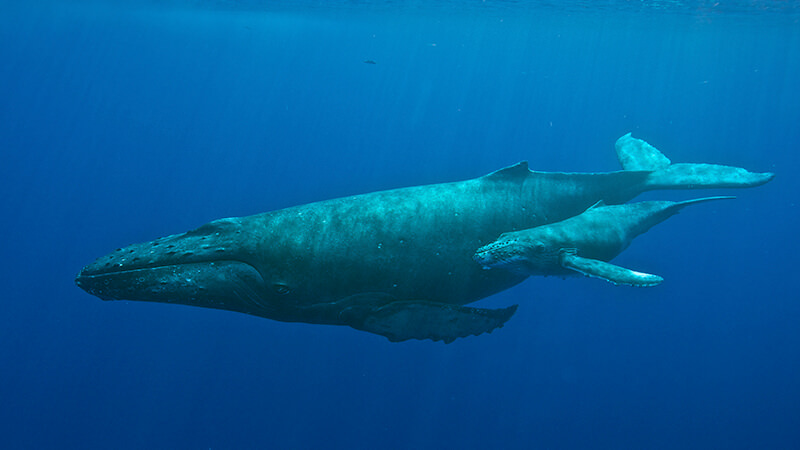
Watch for a misty blow, an arched dark back, long white-edged pectoral fins, tail flukes, breaches, pectoral slaps and tail slaps. Fluke patterns are individually distinctive.
Stay at least 100 yards away—required by federal law in Hawaiʻi.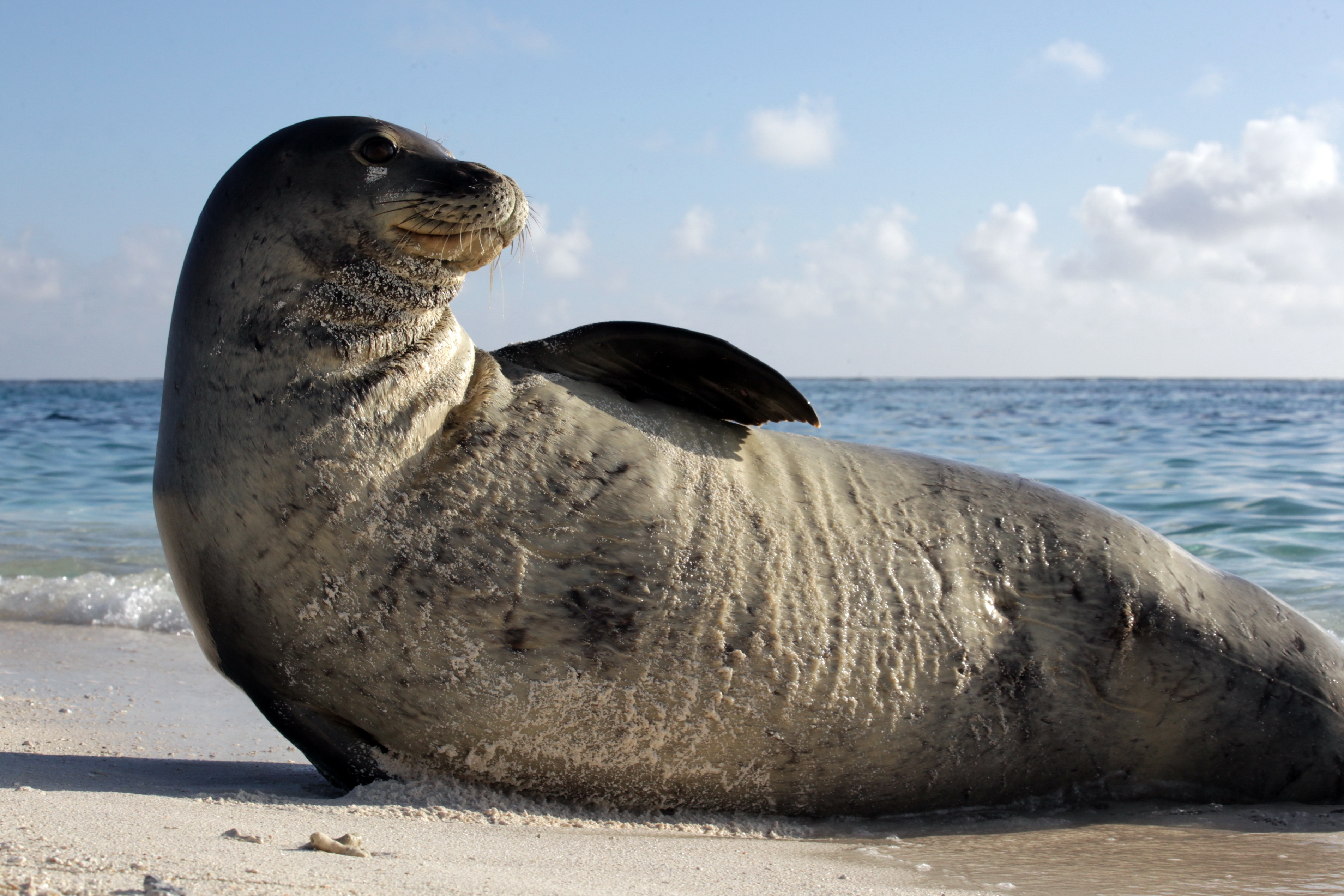
A seal lying motionless on shore is usually resting, not stranded. Never crowd it or block its route to the ocean; remain behind signs and barriers.
NOAA recommends 50 feet, or 150 feet for mothers and pups.
Spinners feed offshore at night and use calm nearshore areas during daylight to rest, socialize and care for young. Their leaps and spins are spectacular, but disturbance costs vital rest.
Do not swim with, approach or remain within 50 yards—federal law in Hawaiʻi.
Honu may surface beside the reef or rest on shore. Give them an open path, never touch or feed them, and avoid standing on coral while watching.
NOAA recommends staying at least 10 feet away on land and in the water.Wildlife images: NOAA/National Marine Sanctuaries; monk seal image NOAA/PIFSC/HMSRP via Wikimedia Commons; spinner dolphin image Hawaii Wildlife Fund.
Protected habitat
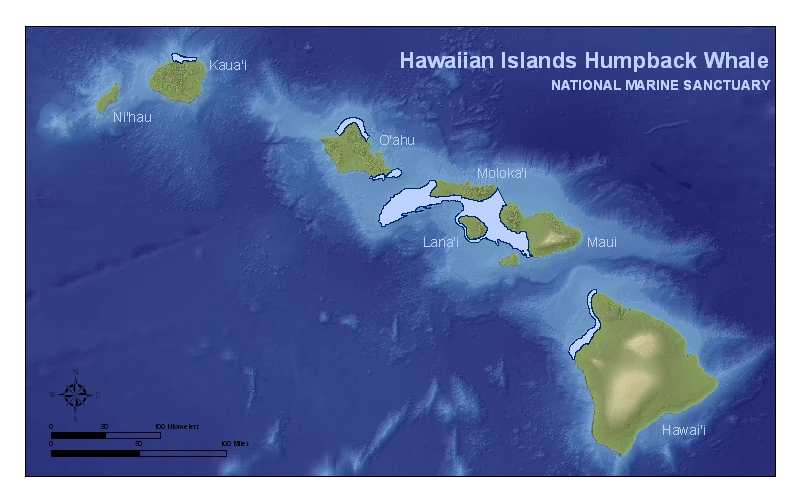
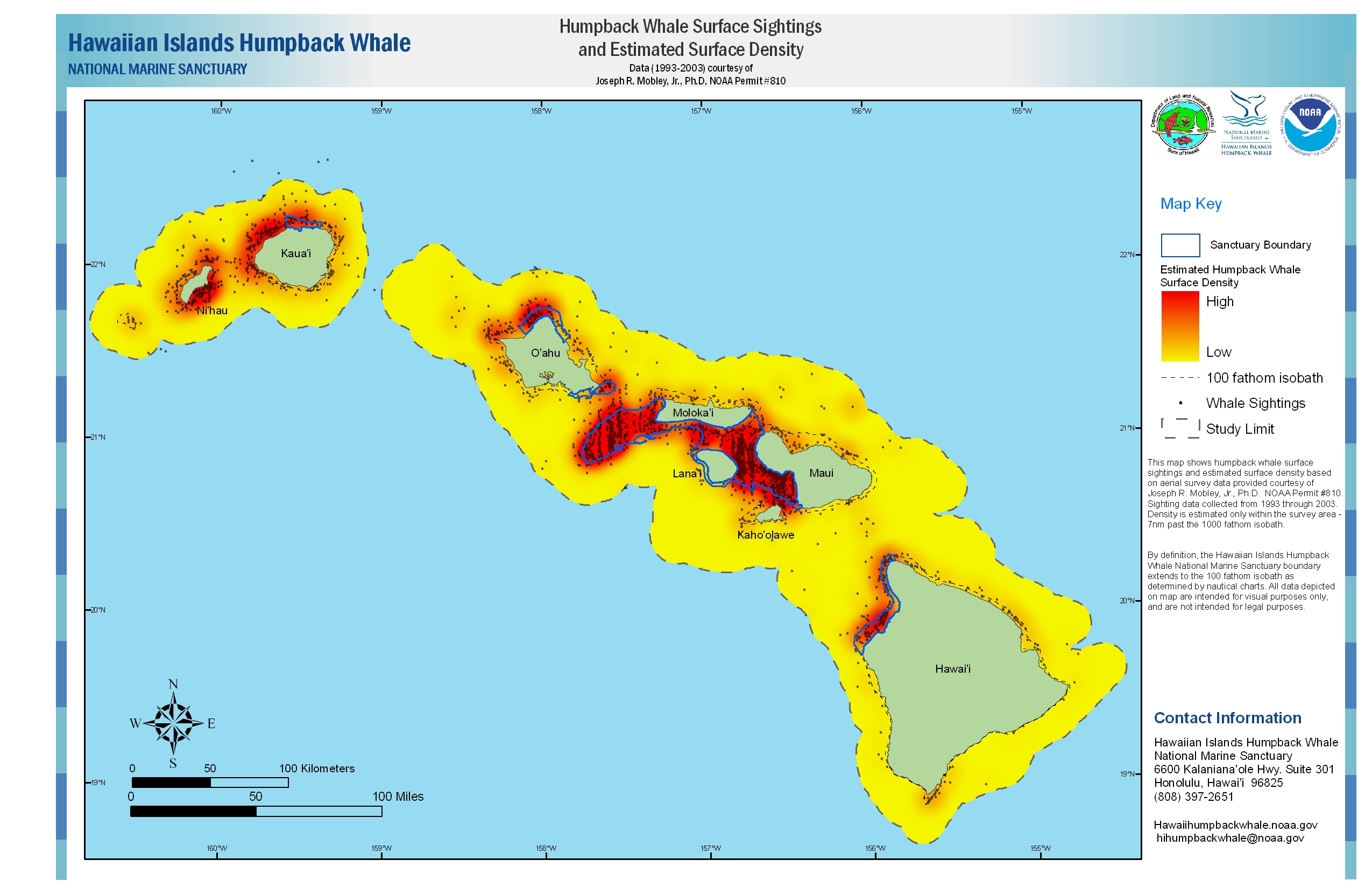
The sanctuary comprises five areas beside six main Hawaiian Islands and protects important shallow wintering habitat. The Maui Nui area—including waters around Maui, Molokaʻi, Lānaʻi and Kahoʻolawe—is its largest component.
Live from Maui Sands
Open the continuous 4K webcam for a real-time view of the shoreline, reef and Pacific outside Unit 4B. During winter, watch for blows, breaches and tail slaps across the channel.
A difficult maritime history
Native Hawaiian relationships with koholā long predate Western commercial whaling and include genealogy, story and cultural connection. NOAA records the first whales taken by foreign commercial crews off Hawaiʻi in 1819. By the mid-1800s, American whaling vessels dominated the Pacific trade and Hawaiian ports became important provisioning centres.
At least 18 whaling-ship losses are documented around the Hawaiian chain, including vessels lost near Maui. Today the sanctuary protects humpbacks and their habitat while also interpreting this maritime history. The contrast is stark: waters once connected to industrial hunting now support research, education, community science and disentanglement work.
Read NOAA’s maritime historyDistance protects resting, nursing and migrating animals—and protects people. These numbers apply whether viewing from a boat, kayak, paddleboard, in the water or from shore.
Make a day of it
Keep binoculars near the lanai, scan during calm morning light and let the webcam continue the watch when you leave.
Ask how the operator maintains legal distances, limits disturbance and responds when whales approach the vessel.
The free visitor centre at 726 South Kīhei Road offers exhibits, programs and a shoreline outlook across sanctuary waters.
Humpback whale photograph: Ed Lyman/NOAA Fisheries, Permit #14097.